
Coming soon
The 150g stainless-steel premium wine bottle set to smash the centuries-old supremacy of glass.
Learn more
Read the FAQ
→
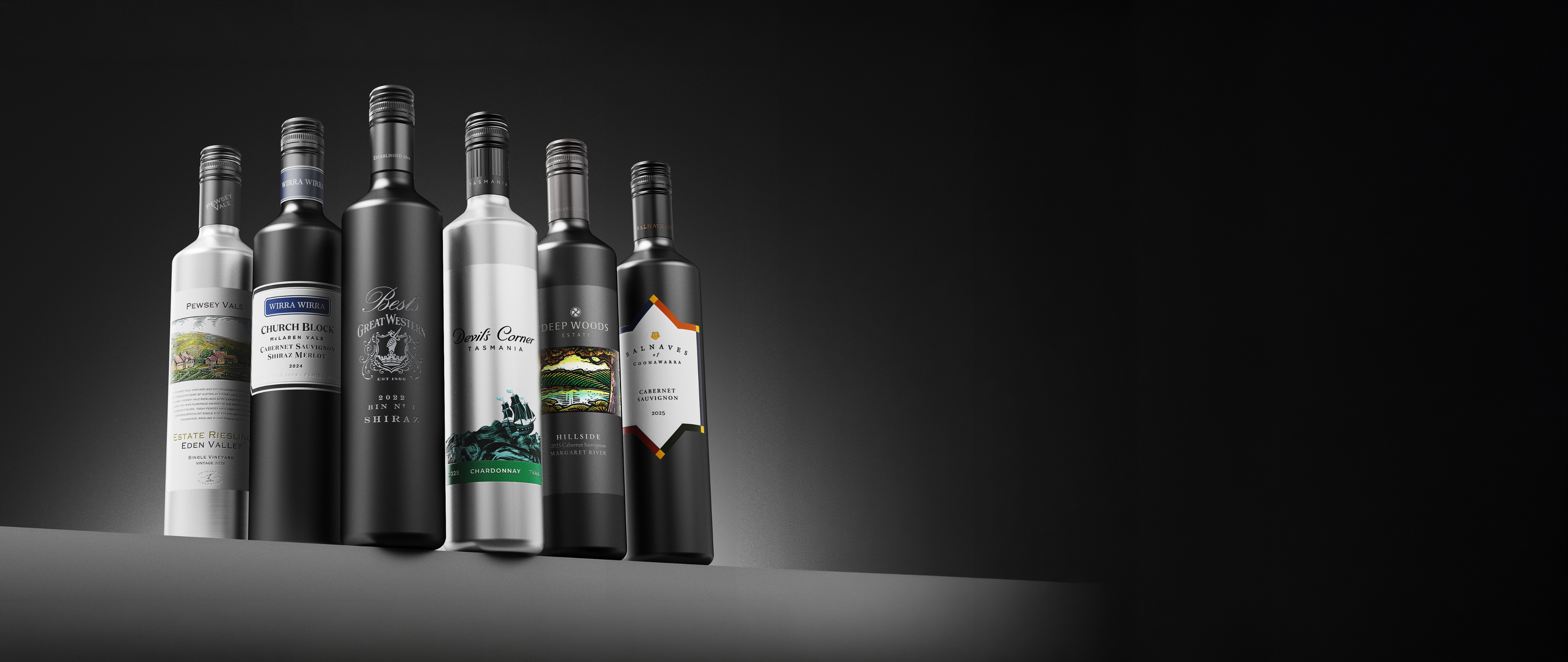
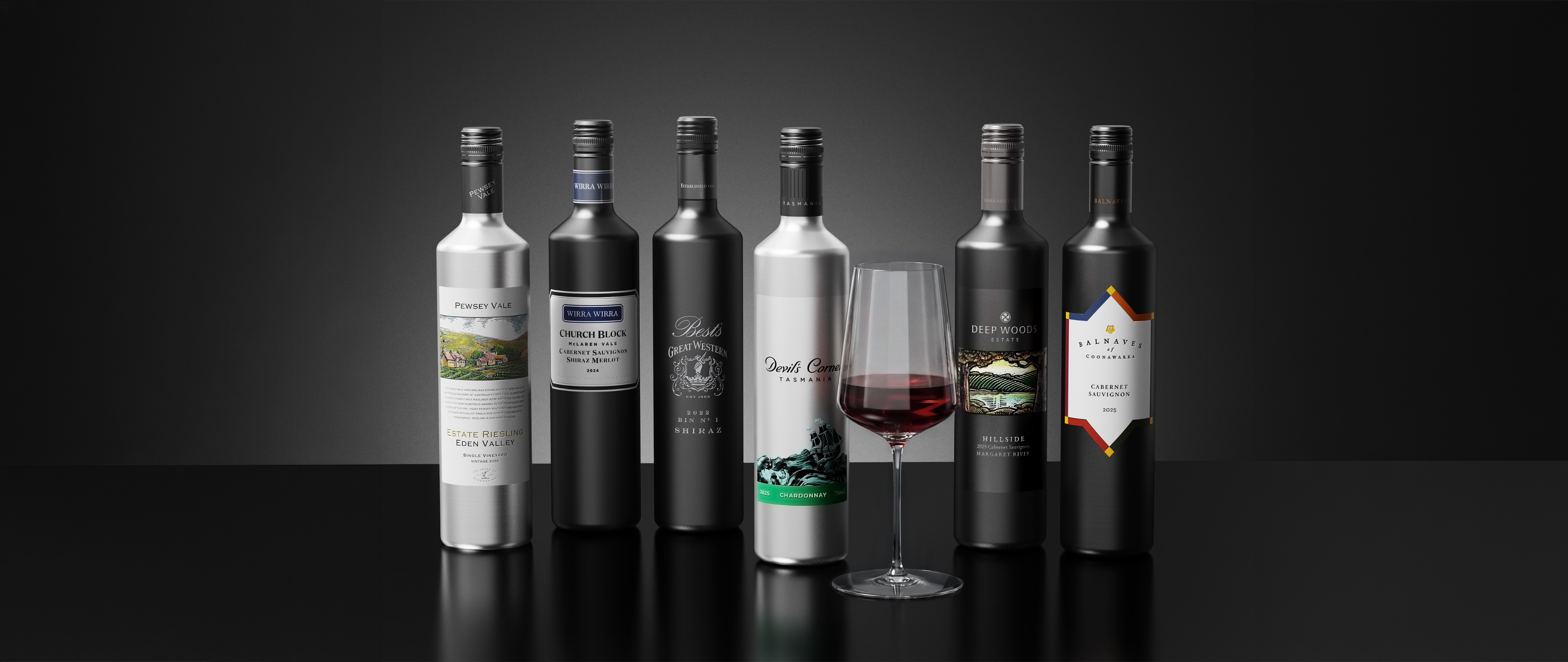
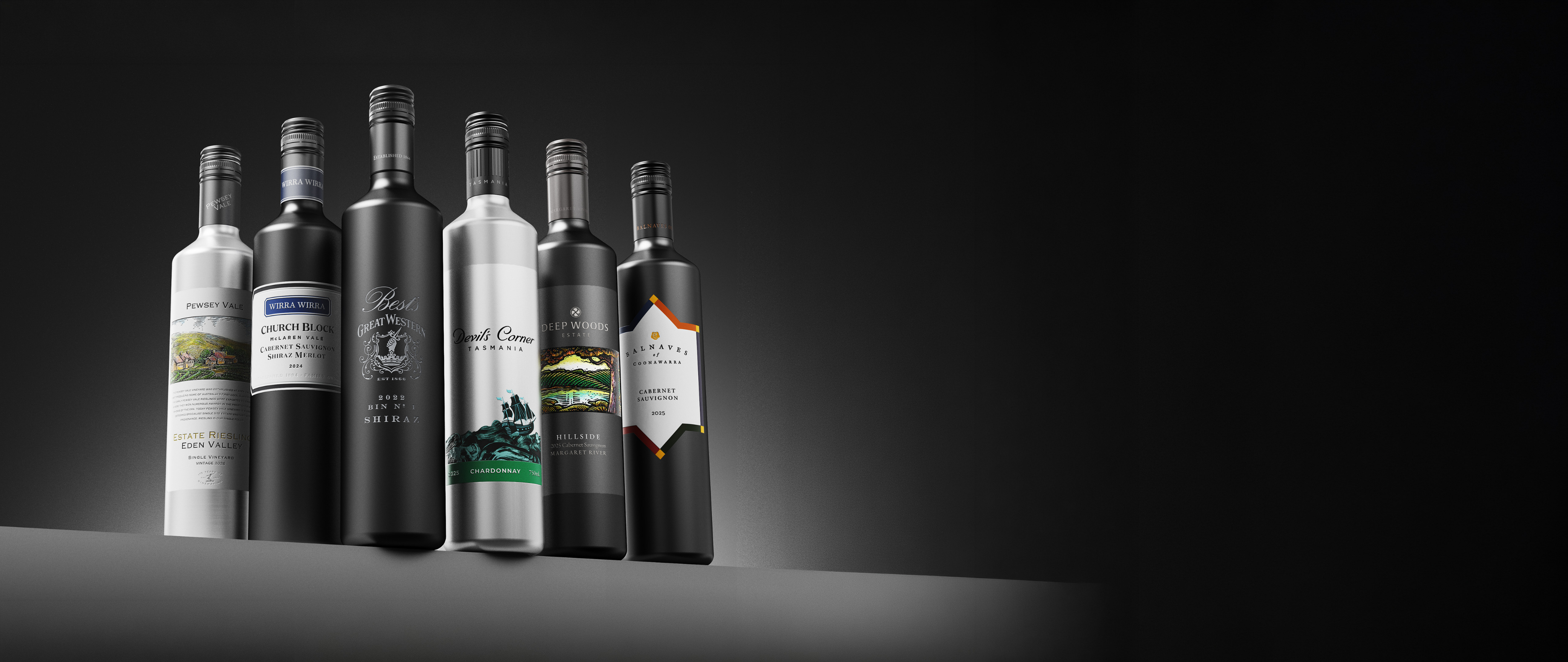
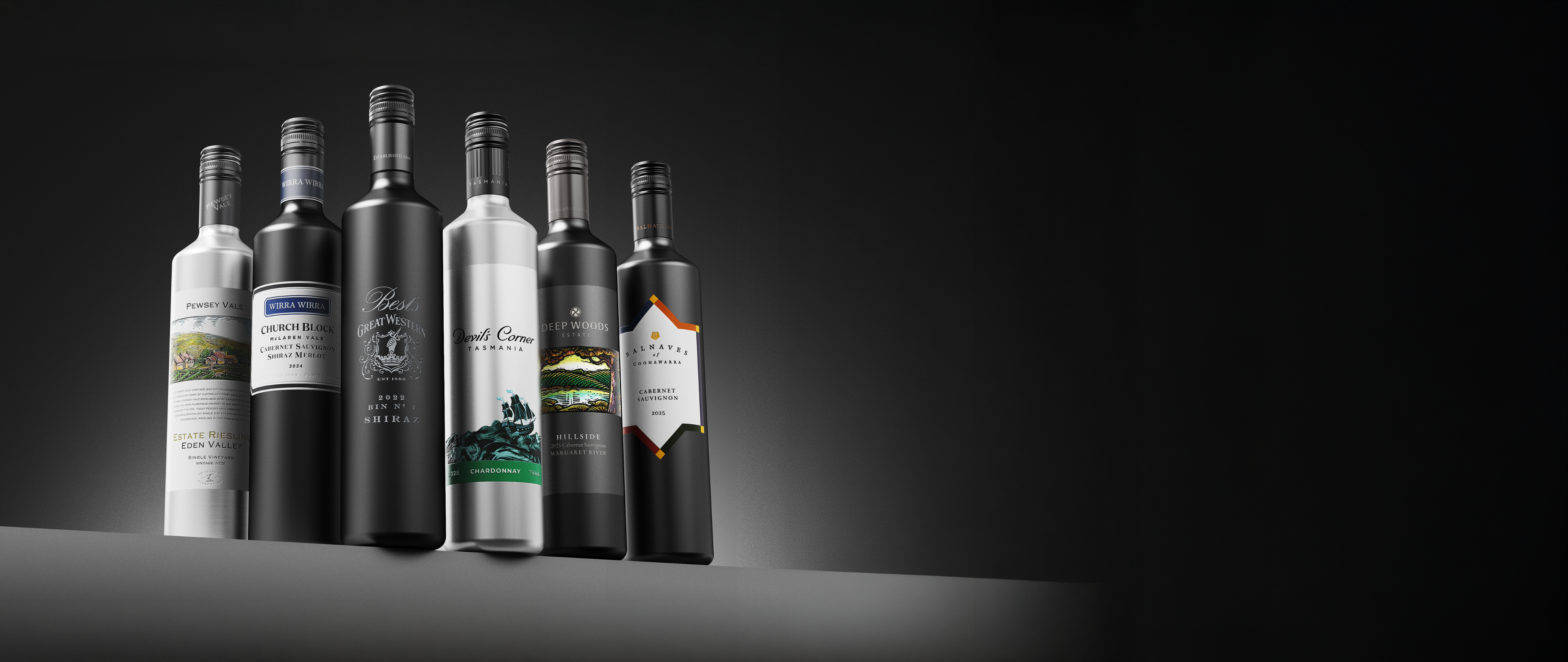
*These brands have agreed to support the evaluation of EcoSteel’s proof of concept. The bottles shown are proof-of-concept prototypes and are not commercially available.
EcoSteel is coming to solve an urgent problem.
With glass bottles contributing some 50% of a wine’s total carbon emissions¹, a sustainable alternative is desperately needed.
Hardy, versatile, stylish and premium in appearance, EcoSteel answers that call.
Currently undergoing proof of concept, this 150g, 750ml, Stelvin-sealed, liner-free, food-grade stainless-steel bottle brings a raft of improvements while matching the virtues that led to the dominance in this field—with none of the downsides of other would-be alternatives.
150g
Bottle weight
2.8×
Lighter than the lightweight glass benchmark
~40%
Higher packing density
90-95%
Recycled content
0
Plastic. Liner-free
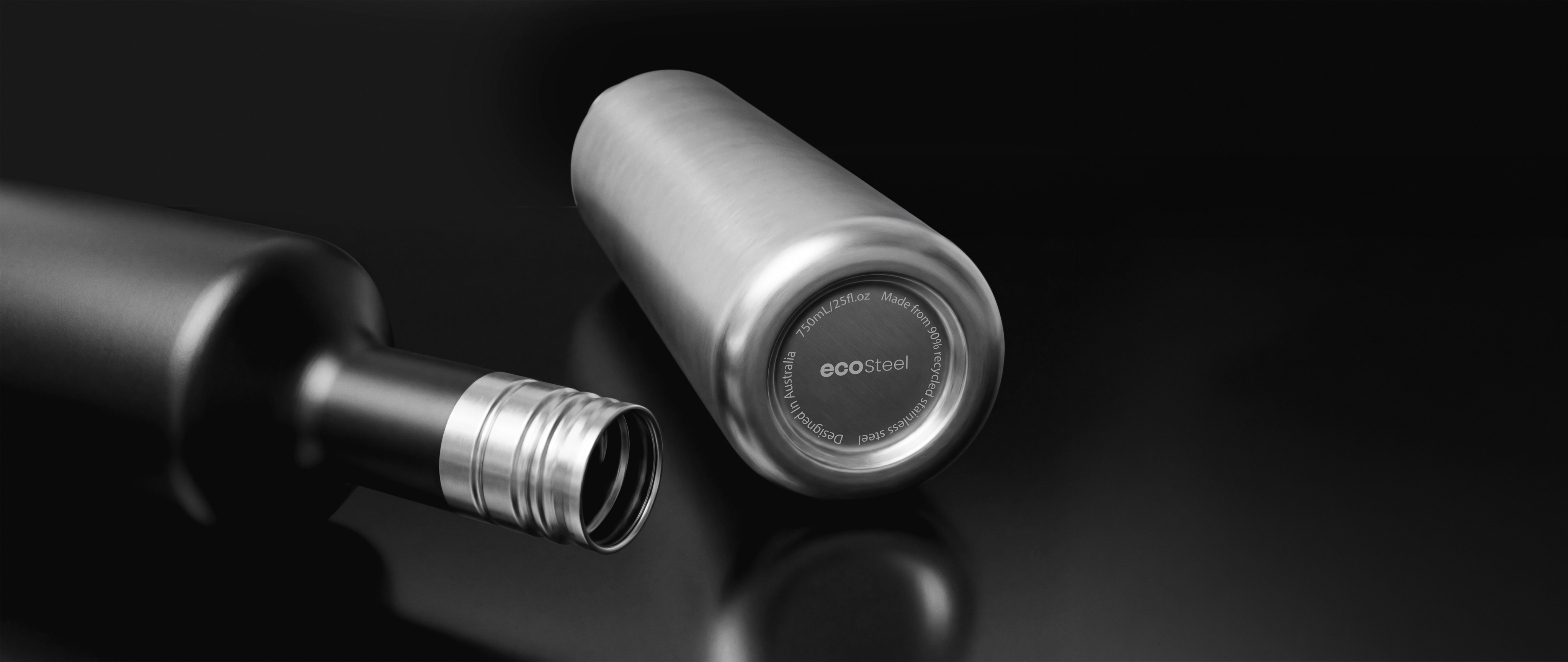
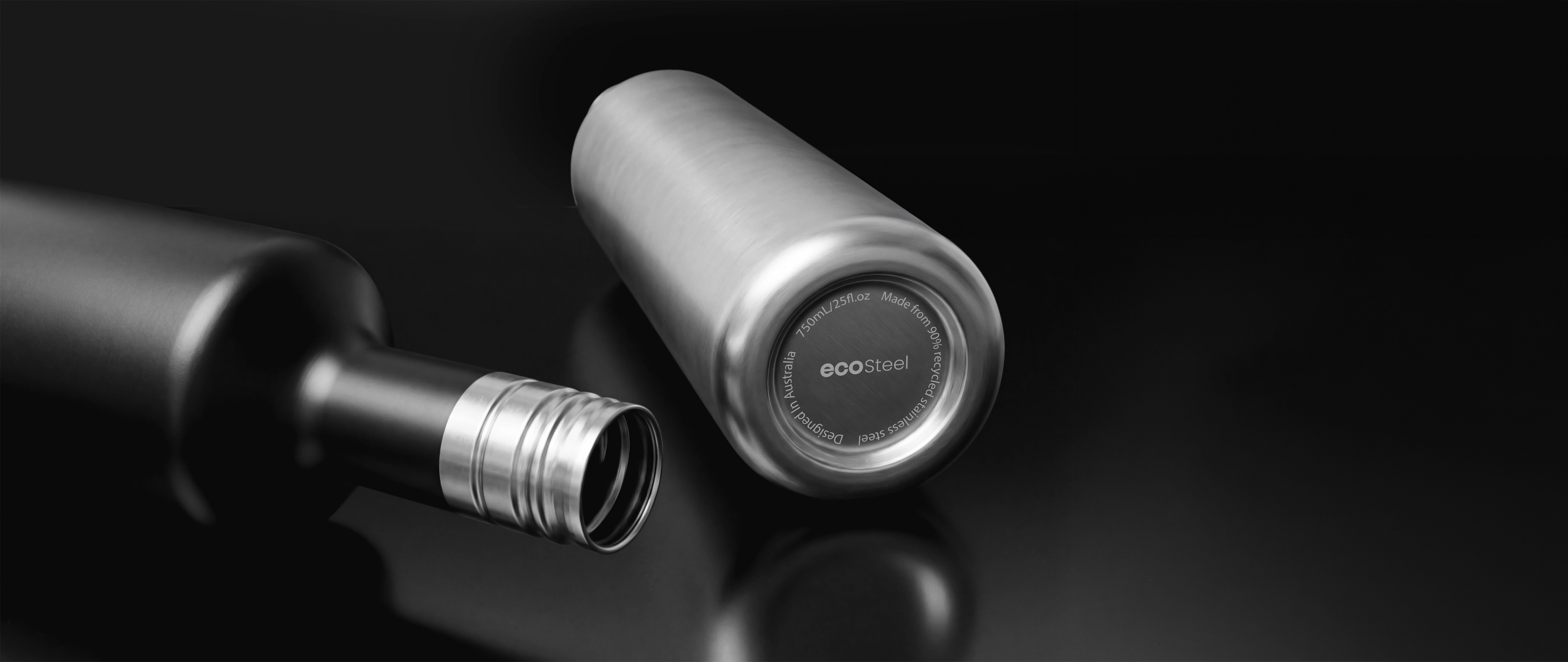
This 150g, 750ml, Stelvin-sealed, liner-free, food-grade stainless-steel bottle aims to replace glass as the default premium-wine bottle of choice.
Material
Why stainless steel?
Stainless steel has a proven track record with wine. It is synonymous with quality, reliability, cleanliness, simplicity and versatility. It’s no coincidence that its growing presence in wineries worldwide at the end of the last century marked a global shift toward greater stability and higher quality.
For all the end-use convenience of these stylish bottles, it is sustainability that brought EcoSteel into being. The pleasurable, life-enhancing memories we create when sharing wine should not be tainted by the thought that it comes at a cost to our environment.
At 150 grams per bottle—2.8 times lighter than the modern benchmark¹ for lightweight glass—EcoSteel promises a colossal reduction in carbon emissions compared to glass.
Fully recyclable and made with 90-95% recycled content, EcoSteel is optimised for transport. By allowing for roughly 40% higher packing density—and with all the downstream benefits of shipping, carrying and storing a lighter, more compact container in whatever volume—the emission reductions and transport savings are unquantifiable.
What it does
Features
01
Ultra-lightweight (150g) bottle
02
Carbon footprint reductions potentially far greater than lightweight glass
03
Cost comparable with *premium glass bottles
04
Optimised for transport (roughly 40% higher packing density)
05
Single-use or reclamation/re-use system (circular model)
06
Removes glass-associated lightstrike and breakage risk
07
Rapid chilling
08
Anti-drip pouring feature
09
Zero plastic (does not contribute to microplastics pollution)
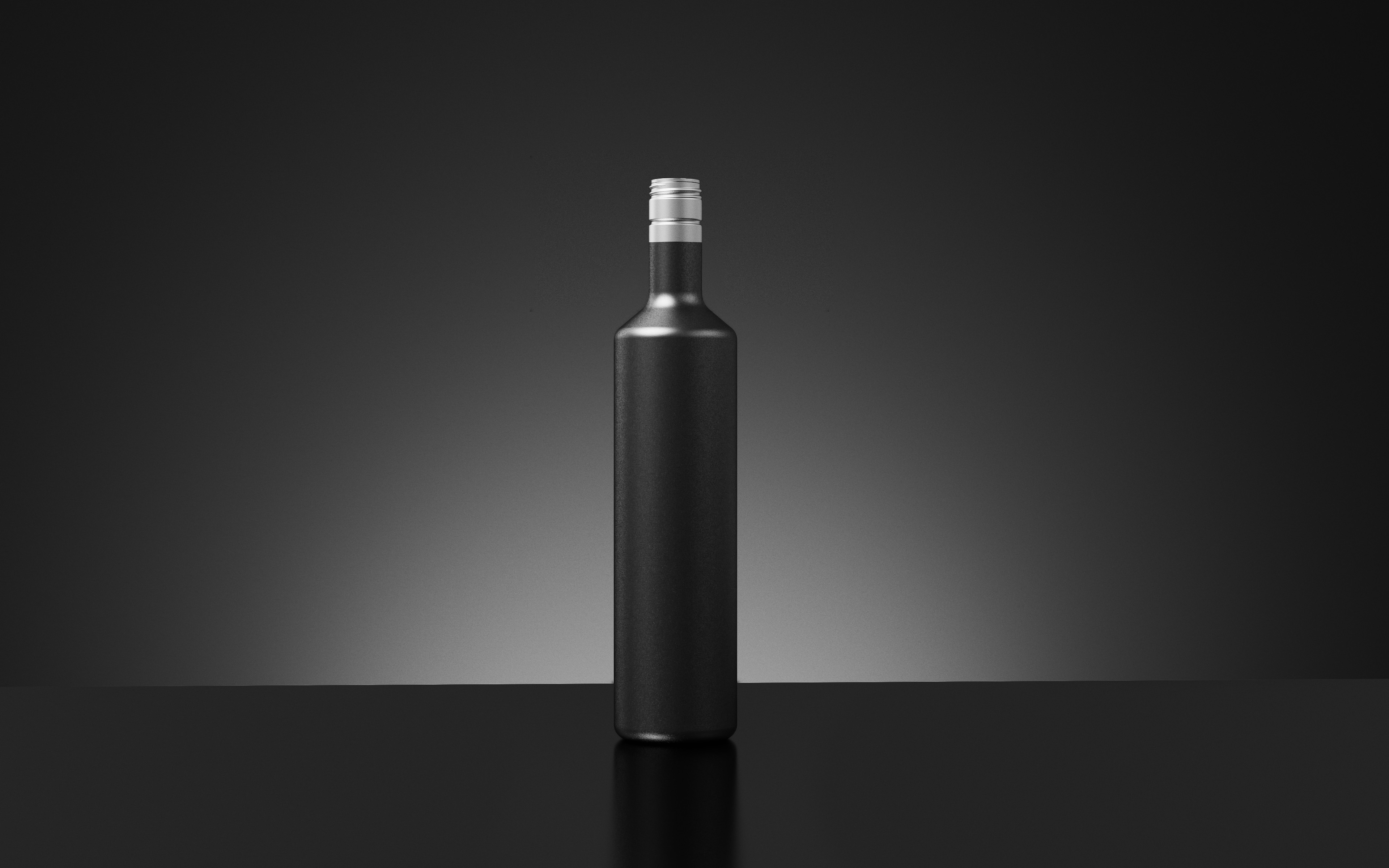


Height 300mm
Neck Ø 30mm
Bottom Ø 68mm

Standard screw cap
30 × 60mm (STO / ROPP)
Smooth shoulder
transition
Single-wall
stainless steel
Pressed base
with subtle radius
Details
Specifications and options
Specifications
750ml (75cl)
Grade 304 stainless steel, single-wall bottle
150g bottle weight
Dimensions: 68mm diameter x 300mm height
Input of 90-95% recycled material
100% recyclable
Compatibility
Suitable for red, white and sparkling wines
Fits with existing labelling lines with minimal modifications
Designed for use with standard 60mm Stelvin screw caps
Options
Standard premium label options
Full paint finish with printing
Laser-etched premium designs
Further possibilities
Full ceramic internal lining
Double wall (highly insulated)
Integrated sensor and technology opportunities
Burgundy bottle shape
The people
Wine One
The EcoSteel bottle is the brainchild of product designers Lloyd Fenn and Jamie Hughes of Wine One. The innovation was born out of a challenge from the Australian wine industry to reduce the carbon footprint of premium wine packaging. With more than 70% of the sector’s total emissions² attributed to packaging and shipping—with heavy glass the lead culprit—it is an urgent problem to solve.
Milestone
December 2025
In December 2025, the EcoSteel bottle progressed to the proof-of-concept stage of an Australian Government Business Research and Innovation Initiative (BRII) following feasibility assessments supported by Wine Australia.
Proof of concept
Taking EcoSteel to market
The proof-of-concept programme is assessing EcoSteel’s technical, environmental and commercial feasibility. As part of this work, Wine One has:
01
Welcomed the support of several Australian wineries for the evaluation of the concept³. Subject to separate agreement with each winery, participation may include the presentation of approved branded prototypes, bottling-line testing, sensory evaluation and market research.
02
Engaged Affinity Labs, the commercial arm of the Australian Wine Research Institute, to test the prototype’s suitability as a long-term wine packaging solution
03
Worked with the University of Queensland to undertake a detailed Life Cycle Assessment (LCA) of the bottle concept. A streamlined LCA conducted during concept development indicated the EcoSteel bottle in a single-use format could have about 1/3 the carbon footprint of a premium glass bottle
04
Agreed thorough bottling-line testing from various major packaging operations
05
Gauged appetite for this innovation among a broad swathe of international wine producers, writers, consultants, retail buyers and monopolies
¹ “The Bottle Weight Accord brings together wine businesses across the value chain to reduce the carbon footprint of glass bottles, which can account for up to half of a wine’s total emissions.” Sustainable Wine Roundtable. Signatories to this group’s admirable Bottle Weight Accord agree to bring the average weight of their bottles to 420g.
² “The manufacture of wine packaging and the transport of packaged wine account for around 70% of the Australian wine industry’s carbon emissions, with heavy glass bottles being the main contributor.” Dr Martin Cole, Wine Australia CEO
³ These brands have agreed to support the evaluation of EcoSteel’s proof of concept. Their participation signals interest in the concept, in keeping with their commitment to sustainability and innovation. Their ongoing support is subject to satisfactory independent technical and environmental validation and should not be taken as an endorsement of the bottle’s performance or environmental claims, or a commitment to commercial adoption. The bottles shown are proof-of-concept prototypes and are not commercially available.

FAQ
Frequently asked questions
How much does the EcoSteel bottle weigh?
The 750ml EcoSteel bottle weighs 150 grams.
What is the EcoSteel bottle made of?
The EcoSteel bottle is made from 100% recyclable, 304-grade stainless steel. It comprises 90-95% recycled material.
Does the EcoSteel bottle contain any plastic?
No, EcoSteel is a liner-free bottle that uses zero plastic.
Who are the people behind the EcoSteel bottle?
The EcoSteel bottle is the brainchild of Melbourne-based product designers Lloyd Fenn and Jamie Hughes, who have continued to drive the concept with the help of their Wine One team.
What are the EcoSteel bottle’s dimensions?
68mm diameter x 300mm height.
What shapes and sizes are available?
The original product contains 750ml and is the same height as, and roughly the same shape as, a Bordeaux bottle. There is scope for additional sizes and shapes such as Burgundy bottles in the future.
When can I order the EcoSteel bottle?
The EcoSteel bottle is set to complete its proof of concept by the end of Q2 2027. It is expected to be ready for commercial use towards the end of Q4 2027.
What is the relationship between the EcoSteel bottle and the wine brands featured on your website?
These brands have agreed to support the evaluation of EcoSteel’s proof of concept. Their participation signals interest in the concept, in keeping with their commitment to sustainability and innovation. Their ongoing support is subject to satisfactory independent technical and environmental validation and should not be taken as an endorsement of the bottle’s performance or environmental claims, or a commitment to commercial adoption. The bottles shown are proof-of-concept prototypes and are not commercially available.
How much does the EcoSteel bottle cost?
The exact cost of an EcoSteel bottle is yet to be determined and will depend on factors such as scale. However, it is expected to be comparable to a bespoke premium bottle.
How can I find out more about the EcoSteel bottle?
To find out more, you can contact ed@ecosteelbottle.com
To find out more, contact us
Get in touch
The bottle
About
FAQ
ed@ecosteelbottle.com
© 2026 EcoSteel. All rights reserved.
Designed in Australia by Wine One
The bottle
About
FAQ
Contact
Coming soon
The 150g stainless-steel premium wine bottle set to smash the centuries-old supremacy of glass.
Learn more
Read the FAQ
→
*These brands have agreed to support the evaluation of EcoSteel’s proof of concept. The bottles shown are proof-of-concept prototypes and are not commercially available.
EcoSteel is coming to solve an urgent problem.
With glass bottles contributing some 50% of a wine’s total carbon emissions¹, a sustainable alternative is desperately needed.
Hardy, versatile, stylish and premium in appearance, EcoSteel answers that call.
Currently undergoing proof of concept, this 150g, 750ml, Stelvin-sealed, liner-free, food-grade stainless-steel bottle brings a raft of improvements while matching the virtues that led to the dominance in this field—with none of the downsides of other would-be alternatives.
150g
Bottle weight
2.8×
Lighter than the lightweight glass benchmark
~40%
Higher packing density
90-95%
Recycled content
0
Plastic. Liner-free
This 150g, 750ml, Stelvin-sealed, liner-free, food-grade stainless-steel bottle aims to replace glass as the default premium-wine bottle of choice.
Material
Why stainless steel?
Stainless steel has a proven track record with wine. It is synonymous with quality, reliability, cleanliness, simplicity and versatility. It’s no coincidence that its growing presence in wineries worldwide at the end of the last century marked a global shift toward greater stability and higher quality.
For all the end-use convenience of these stylish bottles, it is sustainability that brought EcoSteel into being. The pleasurable, life-enhancing memories we create when sharing wine should not be tainted by the thought that it comes at a cost to our environment.
At 150 grams per bottle—2.8 times lighter than the modern benchmark¹ for lightweight glass—EcoSteel promises a colossal reduction in carbon emissions compared to glass.
Fully recyclable and made with 90-95% recycled content, EcoSteel is optimised for transport. By allowing for roughly 40% higher packing density—and with all the downstream benefits of shipping, carrying and storing a lighter, more compact container in whatever volume—the emission reductions and transport savings are unquantifiable.
What it does
Features
01
Ultra-lightweight (150g) bottle
02
Carbon footprint reductions potentially far greater than lightweight glass
03
Cost comparable with *premium glass bottles
04
Optimised for transport (roughly 40% higher packing density)
05
Single-use or reclamation/re-use system (circular model)
06
Removes glass-associated lightstrike and breakage risk
07
Rapid chilling
08
Anti-drip pouring feature
09
Zero plastic (does not contribute to microplastics pollution)


Standard screw cap
30 × 60mm (STO / ROPP)
Smooth shoulder transition
Single-wall stainless steel
Grade 304, liner-free, zero plastic
Pressed base
With subtle radius
Height 300mm
Neck Ø 30mm
Bottom Ø 68mm
Details
Specifications and options
Specifications
750ml (75cl)
Grade 304 stainless steel, single-wall bottle
150g bottle weight
Dimensions: 68mm diameter x 300mm height
Input of 90-95% recycled material
100% recyclable
Compatibility
Suitable for red, white and sparkling wines
Fits with existing labelling lines with minimal modifications
Designed for use with standard 60mm Stelvin screw caps
Options
Standard premium label options
Full paint finish with printing
Laser-etched premium designs
Further possibilities
Full ceramic internal lining
Double wall (highly insulated)
Integrated sensor and technology opportunities
Burgundy bottle shape
The people
Wine One
The EcoSteel bottle is the brainchild of product designers Lloyd Fenn and Jamie Hughes of Wine One. The innovation was born out of a challenge from the Australian wine industry to reduce the carbon footprint of premium wine packaging. With more than 70% of the sector’s total emissions² attributed to packaging and shipping—with heavy glass the lead culprit—it is an urgent problem to solve.
Milestone
December 2025
In December 2025, the EcoSteel bottle progressed to the proof-of-concept stage of an Australian Government Business Research and Innovation Initiative (BRII) following feasibility assessments supported by Wine Australia.
Proof of concept
Taking EcoSteel to market
The proof-of-concept programme is assessing EcoSteel’s technical, environmental and commercial feasibility. As part of this work, Wine One has:
01
Welcomed the support of several Australian wineries for the evaluation of the concept³. Subject to separate agreement with each winery, participation may include the presentation of approved branded prototypes, bottling-line testing, sensory evaluation and market research.
02
Engaged Affinity Labs, the commercial arm of the Australian Wine Research Institute, to test the prototype’s suitability as a long-term wine packaging solution
03
Worked with the University of Queensland to undertake a detailed Life Cycle Assessment (LCA) of the bottle concept. A streamlined LCA conducted during concept development indicated the EcoSteel bottle in a single-use format could have about 1/3 the carbon footprint of a premium glass bottle
04
Agreed thorough bottling-line testing from various major packaging operations
05
Gauged appetite for this innovation among a broad swathe of international wine producers, writers, consultants, retail buyers and monopolies
¹ “The Bottle Weight Accord brings together wine businesses across the value chain to reduce the carbon footprint of glass bottles, which can account for up to half of a wine’s total emissions.” Sustainable Wine Roundtable. Signatories to this group’s admirable Bottle Weight Accord agree to bring the average weight of their bottles to 420g.
² “The manufacture of wine packaging and the transport of packaged wine account for around 70% of the Australian wine industry’s carbon emissions, with heavy glass bottles being the main contributor.” Dr Martin Cole, Wine Australia CEO
³ These brands have agreed to support the evaluation of EcoSteel’s proof of concept. Their participation signals interest in the concept, in keeping with their commitment to sustainability and innovation. Their ongoing support is subject to satisfactory independent technical and environmental validation and should not be taken as an endorsement of the bottle’s performance or environmental claims, or a commitment to commercial adoption. The bottles shown are proof-of-concept prototypes and are not commercially available.
FAQ
Frequently asked questions
How much does the EcoSteel bottle weigh?
The 750ml EcoSteel bottle weighs 150 grams.
What is the EcoSteel bottle made of?
The EcoSteel bottle is made from 100% recyclable, 304-grade stainless steel. It comprises 90-95% recycled material.
Does the EcoSteel bottle contain any plastic?
No, EcoSteel is a liner-free bottle that uses zero plastic.
Who are the people behind the EcoSteel bottle?
The EcoSteel bottle is the brainchild of Melbourne-based product designers Lloyd Fenn and Jamie Hughes, who have continued to drive the concept with the help of their Wine One team.
What are the EcoSteel bottle’s dimensions?
68mm diameter x 300mm height.
What shapes and sizes are available?
The original product contains 750ml and is the same height as, and roughly the same shape as, a Bordeaux bottle. There is scope for additional sizes and shapes such as Burgundy bottles in the future.
When can I order the EcoSteel bottle?
The EcoSteel bottle is set to complete its proof of concept by the end of Q2 2027. It is expected to be ready for commercial use towards the end of Q4 2027.
What is the relationship between the EcoSteel bottle and the wine brands featured on your website?
These brands have agreed to support the evaluation of EcoSteel’s proof of concept. Their participation signals interest in the concept, in keeping with their commitment to sustainability and innovation. Their ongoing support is subject to satisfactory independent technical and environmental validation and should not be taken as an endorsement of the bottle’s performance or environmental claims, or a commitment to commercial adoption. The bottles shown are proof-of-concept prototypes and are not commercially available.
How much does the EcoSteel bottle cost?
The exact cost of an EcoSteel bottle is yet to be determined and will depend on factors such as scale. However, it is expected to be comparable to a bespoke premium bottle.
How can I find out more about the EcoSteel bottle?
To find out more, you can contact ed@ecosteelbottle.com
To find out more, contact us
Get in touch
The bottle
About
FAQ
ed@ecosteelbottle.com
© 2026 EcoSteel. All rights reserved.
Designed in Australia by Wine One
The bottle
About
FAQ
Contact
Coming soon
The 150g stainless-steel premium wine bottle set to smash the centuries-old supremacy of glass.
Learn more
Read the FAQ
→
*These brands have agreed to support the evaluation of EcoSteel’s proof of concept. The bottles shown are proof-of-concept prototypes and are not commercially available.
EcoSteel is coming to solve an urgent problem.
With glass bottles contributing some 50% of a wine’s total carbon emissions¹, a sustainable alternative is desperately needed.
Hardy, versatile, stylish and premium in appearance, EcoSteel answers that call.
Currently undergoing proof of concept, this 150g, 750ml, Stelvin-sealed, liner-free, food-grade stainless-steel bottle brings a raft of improvements while matching the virtues that led to the dominance in this field—with none of the downsides of other would-be alternatives.
150g
Bottle weight
2.8×
Lighter than the lightweight glass benchmark
~40%
Higher packing density
90-95%
Recycled content
0
Plastic. Liner-free
This 150g, 750ml, Stelvin-sealed, liner-free, food-grade stainless-steel bottle aims to replace glass as the default premium-wine bottle of choice.
Material
Why stainless steel?
Stainless steel has a proven track record with wine. It is synonymous with quality, reliability, cleanliness, simplicity and versatility. It’s no coincidence that its growing presence in wineries worldwide at the end of the last century marked a global shift toward greater stability and higher quality.
For all the end-use convenience of these stylish bottles, it is sustainability that brought EcoSteel into being. The pleasurable, life-enhancing memories we create when sharing wine should not be tainted by the thought that it comes at a cost to our environment.
At 150 grams per bottle—2.8 times lighter than the modern benchmark¹ for lightweight glass—EcoSteel promises a colossal reduction in carbon emissions compared to glass.
Fully recyclable and made with 90-95% recycled content, EcoSteel is optimised for transport. By allowing for roughly 40% higher packing density—and with all the downstream benefits of shipping, carrying and storing a lighter, more compact container in whatever volume—the emission reductions and transport savings are unquantifiable.
What it does
Features
01
Ultra-lightweight (150g) bottle
02
Carbon footprint reductions potentially far greater than lightweight glass
03
Cost comparable with *premium glass bottles
04
Optimised for transport (roughly 40% higher packing density)
05
Single-use or reclamation/re-use system (circular model)
06
Removes glass-associated lightstrike and breakage risk
07
Rapid chilling
08
Anti-drip pouring feature
09
Zero plastic (does not contribute to microplastics pollution)


Standard screw cap
30 × 60mm (STO / ROPP)
Smooth shoulder transition
Single-wall stainless steel
Grade 304, liner-free, zero plastic
Pressed base
With subtle radius
Height 300mm
Neck Ø 30mm
Bottom Ø 68mm
Details
Specifications and options
Specifications
750ml (75cl)
Grade 304 stainless steel, single-wall bottle
150g bottle weight
Dimensions: 68mm diameter x 300mm height
Input of 90-95% recycled material
100% recyclable
Compatibility
Suitable for red, white and sparkling wines
Fits with existing labelling lines with minimal modifications
Designed for use with standard 60mm Stelvin screw caps
Options
Standard premium label options
Full paint finish with printing
Laser-etched premium designs
Further possibilities
Full ceramic internal lining
Double wall (highly insulated)
Integrated sensor and technology opportunities
Burgundy bottle shape
The people
Wine One
The EcoSteel bottle is the brainchild of product designers Lloyd Fenn and Jamie Hughes of Wine One. The innovation was born out of a challenge from the Australian wine industry to reduce the carbon footprint of premium wine packaging. With more than 70% of the sector’s total emissions² attributed to packaging and shipping—with heavy glass the lead culprit—it is an urgent problem to solve.
Milestone
December 2025
In December 2025, the EcoSteel bottle progressed to the proof-of-concept stage of an Australian Government Business Research and Innovation Initiative (BRII) following feasibility assessments supported by Wine Australia.
Proof of concept
Taking EcoSteel to market
The proof-of-concept programme is assessing EcoSteel’s technical, environmental and commercial feasibility. As part of this work, Wine One has:
01
Welcomed the support of several Australian wineries for the evaluation of the concept³. Subject to separate agreement with each winery, participation may include the presentation of approved branded prototypes, bottling-line testing, sensory evaluation and market research.
02
Engaged Affinity Labs, the commercial arm of the Australian Wine Research Institute, to test the prototype’s suitability as a long-term wine packaging solution
03
Worked with the University of Queensland to undertake a detailed Life Cycle Assessment (LCA) of the bottle concept. A streamlined LCA conducted during concept development indicated the EcoSteel bottle in a single-use format could have about 1/3 the carbon footprint of a premium glass bottle
04
Agreed thorough bottling-line testing from various major packaging operations
05
Gauged appetite for this innovation among a broad swathe of international wine producers, writers, consultants, retail buyers and monopolies
¹ “The Bottle Weight Accord brings together wine businesses across the value chain to reduce the carbon footprint of glass bottles, which can account for up to half of a wine’s total emissions.” Sustainable Wine Roundtable. Signatories to this group’s admirable Bottle Weight Accord agree to bring the average weight of their bottles to 420g.
² “The manufacture of wine packaging and the transport of packaged wine account for around 70% of the Australian wine industry’s carbon emissions, with heavy glass bottles being the main contributor.” Dr Martin Cole, Wine Australia CEO
³ These brands have agreed to support the evaluation of EcoSteel’s proof of concept. Their participation signals interest in the concept, in keeping with their commitment to sustainability and innovation. Their ongoing support is subject to satisfactory independent technical and environmental validation and should not be taken as an endorsement of the bottle’s performance or environmental claims, or a commitment to commercial adoption. The bottles shown are proof-of-concept prototypes and are not commercially available.
FAQ
Frequently asked questions
How much does the EcoSteel bottle weigh?
The 750ml EcoSteel bottle weighs 150 grams.
What is the EcoSteel bottle made of?
The EcoSteel bottle is made from 100% recyclable, 304-grade stainless steel. It comprises 90-95% recycled material.
Does the EcoSteel bottle contain any plastic?
No, EcoSteel is a liner-free bottle that uses zero plastic.
Who are the people behind the EcoSteel bottle?
The EcoSteel bottle is the brainchild of Melbourne-based product designers Lloyd Fenn and Jamie Hughes, who have continued to drive the concept with the help of their Wine One team.
What are the EcoSteel bottle’s dimensions?
68mm diameter x 300mm height.
What shapes and sizes are available?
The original product contains 750ml and is the same height as, and roughly the same shape as, a Bordeaux bottle. There is scope for additional sizes and shapes such as Burgundy bottles in the future.
When can I order the EcoSteel bottle?
The EcoSteel bottle is set to complete its proof of concept by the end of Q2 2027. It is expected to be ready for commercial use towards the end of Q4 2027.
What is the relationship between the EcoSteel bottle and the wine brands featured on your website?
These brands have agreed to support the evaluation of EcoSteel’s proof of concept. Their participation signals interest in the concept, in keeping with their commitment to sustainability and innovation. Their ongoing support is subject to satisfactory independent technical and environmental validation and should not be taken as an endorsement of the bottle’s performance or environmental claims, or a commitment to commercial adoption. The bottles shown are proof-of-concept prototypes and are not commercially available.
How much does the EcoSteel bottle cost?
The exact cost of an EcoSteel bottle is yet to be determined and will depend on factors such as scale. However, it is expected to be comparable to a bespoke premium bottle.
How can I find out more about the EcoSteel bottle?
To find out more, you can contact ed@ecosteelbottle.com
To find out more, contact us
Get in touch
The bottle
About
FAQ
ed@ecosteelbottle.com
© 2026 EcoSteel. All rights reserved.
Designed in Australia by Wine One
The bottle
About
FAQ
Contact
Coming soon
The 150g stainless-steel premium wine bottle set to smash the centuries-old supremacy of glass.
Learn more
Read the FAQ
→
*These brands have agreed to support the evaluation of EcoSteel’s proof of concept. The bottles shown are proof-of-concept prototypes and are not commercially available.
EcoSteel is coming to solve an urgent problem.
With glass bottles contributing some 50% of a wine’s total carbon emissions¹, a sustainable alternative is desperately needed.
Hardy, versatile, stylish and premium in appearance, EcoSteel answers that call.
Currently undergoing proof of concept, this 150g, 750ml, Stelvin-sealed, liner-free, food-grade stainless-steel bottle brings a raft of improvements while matching the virtues that led to the dominance in this field—with none of the downsides of other would-be alternatives.
150g
Bottle weight
2.8×
Lighter than the lightweight glass benchmark
~40%
Higher packing density
90-95%
Recycled content
0
Plastic. Liner-free
This 150g, 750ml, Stelvin-sealed, liner-free, food-grade stainless-steel bottle aims to replace glass as the default premium-wine bottle of choice.
Material
Why stainless steel?
Stainless steel has a proven track record with wine. It is synonymous with quality, reliability, cleanliness, simplicity and versatility. It’s no coincidence that its growing presence in wineries worldwide at the end of the last century marked a global shift toward greater stability and higher quality.
For all the end-use convenience of these stylish bottles, it is sustainability that brought EcoSteel into being. The pleasurable, life-enhancing memories we create when sharing wine should not be tainted by the thought that it comes at a cost to our environment.
At 150 grams per bottle—2.8 times lighter than the modern benchmark¹ for lightweight glass—EcoSteel promises a colossal reduction in carbon emissions compared to glass.
Fully recyclable and made with 90-95% recycled content, EcoSteel is optimised for transport. By allowing for roughly 40% higher packing density—and with all the downstream benefits of shipping, carrying and storing a lighter, more compact container in whatever volume—the emission reductions and transport savings are unquantifiable.
What it does
Features
01
Ultra-lightweight (150g) bottle
02
Carbon footprint reductions potentially far greater than lightweight glass
03
Cost comparable with *premium glass bottles
04
Optimised for transport (roughly 40% higher packing density)
05
Single-use or reclamation/re-use system (circular model)
06
Removes glass-associated lightstrike and breakage risk
07
Rapid chilling
08
Anti-drip pouring feature
09
Zero plastic (does not contribute to microplastics pollution)


Standard screw cap
30 × 60mm (STO / ROPP)
Smooth shoulder transition
Single-wall stainless steel
Grade 304, liner-free, zero plastic
Pressed base
With subtle radius
Height 300mm
Neck Ø 30mm
Bottom Ø 68mm
Details
Specifications and options
Specifications
750ml (75cl)
Grade 304 stainless steel, single-wall bottle
150g bottle weight
Dimensions: 68mm diameter x 300mm height
Input of 90-95% recycled material
100% recyclable
Compatibility
Suitable for red, white and sparkling wines
Fits with existing labelling lines with minimal modifications
Designed for use with standard 60mm Stelvin screw caps
Options
Standard premium label options
Full paint finish with printing
Laser-etched premium designs
Further possibilities
Full ceramic internal lining
Double wall (highly insulated)
Integrated sensor and technology opportunities
Burgundy bottle shape
The people
Wine One
The EcoSteel bottle is the brainchild of product designers Lloyd Fenn and Jamie Hughes of Wine One. The innovation was born out of a challenge from the Australian wine industry to reduce the carbon footprint of premium wine packaging. With more than 70% of the sector’s total emissions² attributed to packaging and shipping—with heavy glass the lead culprit—it is an urgent problem to solve.
Milestone
December 2025
In December 2025, the EcoSteel bottle progressed to the proof-of-concept stage of an Australian Government Business Research and Innovation Initiative (BRII) following feasibility assessments supported by Wine Australia.
Proof of concept
Taking EcoSteel to market
The proof-of-concept programme is assessing EcoSteel’s technical, environmental and commercial feasibility. As part of this work, Wine One has:
01
Welcomed the support of several Australian wineries for the evaluation of the concept³. Subject to separate agreement with each winery, participation may include the presentation of approved branded prototypes, bottling-line testing, sensory evaluation and market research.
02
Engaged Affinity Labs, the commercial arm of the Australian Wine Research Institute, to test the prototype’s suitability as a long-term wine packaging solution
03
Worked with the University of Queensland to undertake a detailed Life Cycle Assessment (LCA) of the bottle concept. A streamlined LCA conducted during concept development indicated the EcoSteel bottle in a single-use format could have about 1/3 the carbon footprint of a premium glass bottle
04
Agreed thorough bottling-line testing from various major packaging operations
05
Gauged appetite for this innovation among a broad swathe of international wine producers, writers, consultants, retail buyers and monopolies
¹ “The Bottle Weight Accord brings together wine businesses across the value chain to reduce the carbon footprint of glass bottles, which can account for up to half of a wine’s total emissions.” Sustainable Wine Roundtable. Signatories to this group’s admirable Bottle Weight Accord agree to bring the average weight of their bottles to 420g.
² “The manufacture of wine packaging and the transport of packaged wine account for around 70% of the Australian wine industry’s carbon emissions, with heavy glass bottles being the main contributor.” Dr Martin Cole, Wine Australia CEO
³ These brands have agreed to support the evaluation of EcoSteel’s proof of concept. Their participation signals interest in the concept, in keeping with their commitment to sustainability and innovation. Their ongoing support is subject to satisfactory independent technical and environmental validation and should not be taken as an endorsement of the bottle’s performance or environmental claims, or a commitment to commercial adoption. The bottles shown are proof-of-concept prototypes and are not commercially available.
FAQ
Frequently asked questions
How much does the EcoSteel bottle weigh?
The 750ml EcoSteel bottle weighs 150 grams.
What is the EcoSteel bottle made of?
The EcoSteel bottle is made from 100% recyclable, 304-grade stainless steel. It comprises 90-95% recycled material.
Does the EcoSteel bottle contain any plastic?
No, EcoSteel is a liner-free bottle that uses zero plastic.
Who are the people behind the EcoSteel bottle?
The EcoSteel bottle is the brainchild of Melbourne-based product designers Lloyd Fenn and Jamie Hughes, who have continued to drive the concept with the help of their Wine One team.
What are the EcoSteel bottle’s dimensions?
68mm diameter x 300mm height.
What shapes and sizes are available?
The original product contains 750ml and is the same height as, and roughly the same shape as, a Bordeaux bottle. There is scope for additional sizes and shapes such as Burgundy bottles in the future.
When can I order the EcoSteel bottle?
The EcoSteel bottle is set to complete its proof of concept by the end of Q2 2027. It is expected to be ready for commercial use towards the end of Q4 2027.
What is the relationship between the EcoSteel bottle and the wine brands featured on your website?
These brands have agreed to support the evaluation of EcoSteel’s proof of concept. Their participation signals interest in the concept, in keeping with their commitment to sustainability and innovation. Their ongoing support is subject to satisfactory independent technical and environmental validation and should not be taken as an endorsement of the bottle’s performance or environmental claims, or a commitment to commercial adoption. The bottles shown are proof-of-concept prototypes and are not commercially available.
How much does the EcoSteel bottle cost?
The exact cost of an EcoSteel bottle is yet to be determined and will depend on factors such as scale. However, it is expected to be comparable to a bespoke premium bottle.
How can I find out more about the EcoSteel bottle?
To find out more, you can contact ed@ecosteelbottle.com
To find out more, contact us
Get in touch
The bottle
About
FAQ
ed@ecosteelbottle.com
© 2026 EcoSteel. All rights reserved.
Designed in Australia by Wine One